Net metering in Maine
What Is Net Metering? How Does it Work?
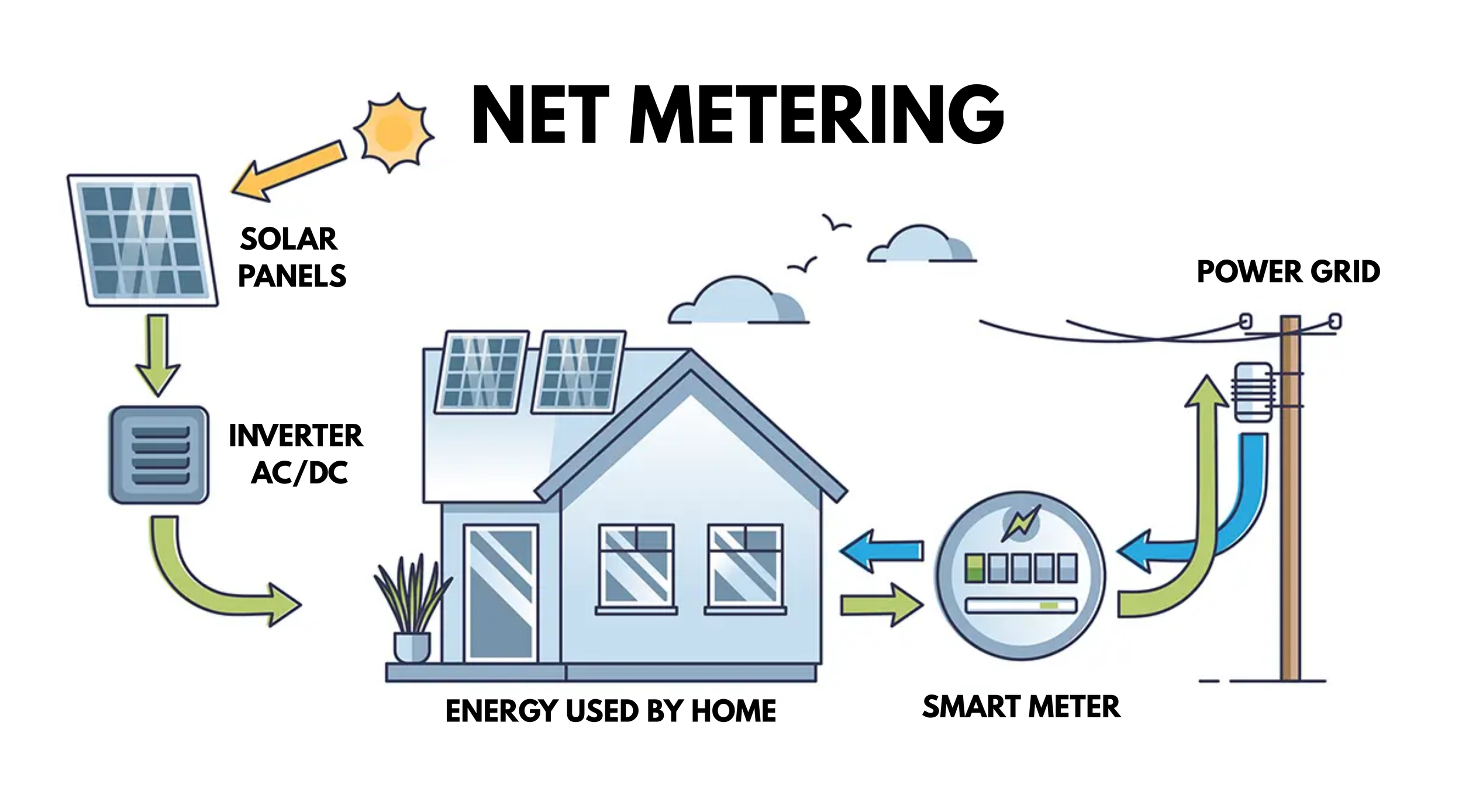
Net Metering, also known as Net Energy Billing (NEB) in Maine is a billing system for customers that generate electricity. When you generate energy your bill will reflect any excess generation and usage beyond what is generated or purchased on your bill. If you have excess generation in a billing period, it is banked for later use.
How it works:
When your solar panels generate more power than your home uses, the extra energy is sent back to the grid.
Your utility company gives you kWh credit for that surplus power.
Later, when your panels do not produce enough—such as at night or in winter—you can use those credits to offset your electricity bills.
This system, known as net metering or net energy billing, allows homeowners to use the grid like a virtual storage system, crediting them for excess solar power and reducing their future electricity bills.
Benefits of Net Metering for Maine Homeowners
So, is net metering worth it? The answer is a big yes, especially if you are interested in solar energy or if there is someone who cares deeply about renewable energy and reduces their carbon footprint.
Here are the major benefits:
Lower Monthly Bills: You earn net metering bill savings using credits instead of paying full price for electricity during non-sunny periods.
Faster return on investment on Solar Installations: The more energy you produce and credit back, the faster you recover the investment of your solar power system.
Support for the Grid: By feeding power back into the system, you help reduce tension on the transmission and distribution network, especially during peak hours.
Our Environment: You are directly contributing to the energy transition of Maine and helping to reduce reliance on fossil fuels.
Access and Affordability: Net metering helps to make solar projects financially feasible and encourages adoption at all income levels.
These net benefits not only improve the finances of individual homes but also support a widespread push for sustainable energy and climate resilience.
Can Maine’s Net Metering Policy Change?
Great question — and one we hear often.
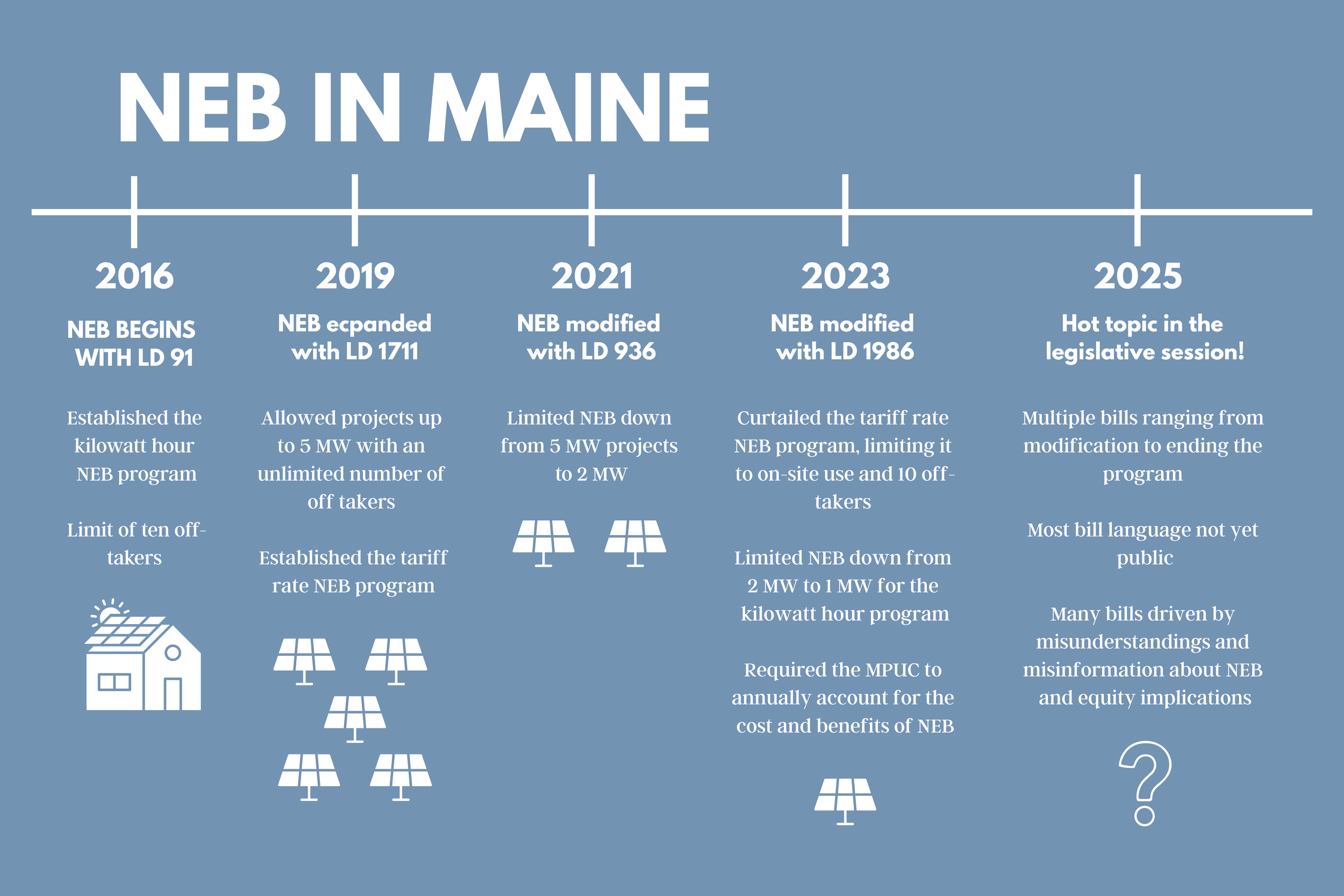
Net metering has been part of Maine’s energy policy for more than a decade and is overseen by the Maine Public Utilities Commission (PUC).
While the program is periodically reviewed, most of the recent updates in the news — including 2025 legislative changes — primarily affect larger commercial and community-scale projects, not typical residential rooftop systems.
Maine’s Net Energy Billing program remains open and unchanged to new residential participants. Homeowners who install solar under today’s terms stay on those terms for the duration of their agreement (typically up to 20 years), even if the program changes for future residential installations.
That’s one reason many Mainers are choosing to go solar now: it locks in today’s crediting structure and protects the long-term value of the energy your home produces.
Thinking of Going Solar?
At First Light Energy, we’ve helped hundreds of Mainers understand their solar options and design systems that maximize long-term savings.
Our team guides you through every step — from local permitting and utility coordination to final net-energy-billing enrollment — so your system is installed, approved, and earning credits as smoothly as possible.
Together, we’ll design a solar solution that fits your home, your budget, and your energy goals.
Schedule your free, no-pressure consultation with our Maine-based team today and see how net metering can help you save.