

What Mainers Need to Know about the New
Plug-in Solar Law (LD 1730)
As of April 2026, Maine has legalized “plug-in” or Balcony solar. This allows renters or homeowners to use small, portable solar systems that plug directly into standard wall outlets. The law permits systems up to 1.2 kW, with units over 420 watts requiring a licensed electrician. This allows individuals the ability to lower electricity bills and offset usage on a small scale.
When will plug-in solar be available to consumers in Maine?
Plug-in solar systems won’t be available to consumers until updates to product safety codes and standards have been made. This is expected to happen later this year. By the fall, Mainers should be on the lookout for products that advertise themselves compliant with UL3700.
What is plug-in solar?
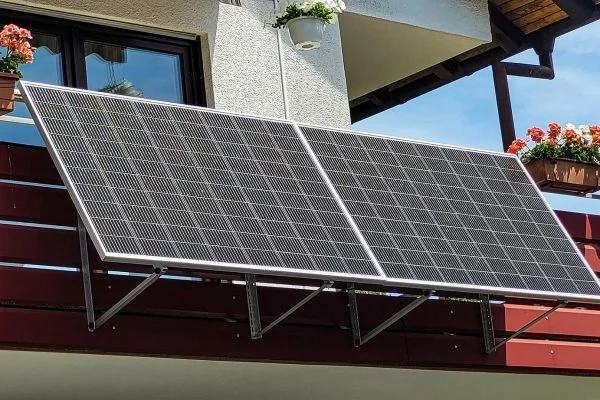
Plug-in solar, also called balcony solar, lets a person plug a solar panel directly into their home through a standard outdoor outlet, generating clean, renewable energy and reducing the amount of electricity they need to buy from the grid. Unfortunately, plug-in solar does not link with the utility so there is no ability to store excess power generation and get a return of credits.
What Plug-In Solar Can (and Can’t) Do
Plug-in solar is designed to offset a small portion of your electricity use—not power your entire home. These systems are limited in size—often around 800 to 1200 watts—which is why their overall impact is relatively small. In most cases, the energy produced is comparable to running a window AC unit, a hair dryer, or a few everyday household loads.
In practical terms, it’s closer to offsetting a few daytime loads rather than significantly reducing your overall electric bill. These systems are not eligible for net energy billing, so excess generation does not receive credit. For homeowners with good sun exposure, rooftop solar remains the most impactful way to offset electricity use. If you’re comparing plug-in solar to a full rooftop system, you can learn more about how solar works in Maine and what to expect here.
Why Installation Still Matters
Even though these systems are designed to plug into an outlet, they interact with your home’s electrical system in a different way than traditional appliances.
One of the key considerations is how electricity flows back into a circuit. In some cases, that can introduce more current than the wiring or breaker was originally designed to handle—especially in older homes.
That’s why this law is expected to require involvement from a licensed electrician, particularly for larger systems above 420 watts. In some cases, this may also include using a dedicated circuit to safely handle the way electricity flows through the system—helping ensure everything is installed safely and working properly with your home.